What Advanced Manufacturing Processes Does WSTitanium Use Today?
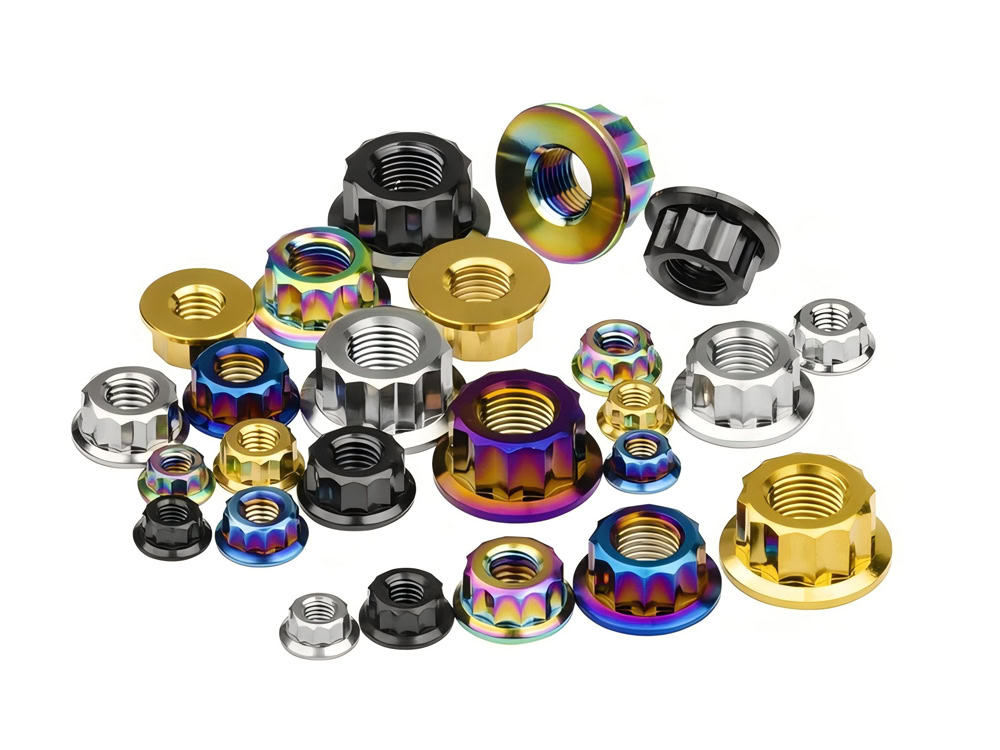
WSTitanium leverages additive manufacturing and vacuum-based refining to produce high-performance alloys, achieving 99.9% theoretical density in 2026 production cycles. These techniques mitigate interstitial contamination, ensuring yield strengths exceed 1,100 MPa for aerospace turbine components while reducing material waste by 40% through precise powder bed fusion.
The manufacturing workflow at wstitanium begins with vacuum arc remelting, a process required to eliminate inclusions that compromise structural reliability in titanium grade 5. During the 2025 fiscal year, engineers observed that triple-melt ingots reduced micro-void occurrences by 65% compared to single-melt alternatives.
Precise thermal control during this stage maintains impurity levels below 0.13% oxygen content, which aligns with international standards for high-stress aviation components.
Once the material passes these chemical purity benchmarks, the production line transitions to laser powder bed fusion for the fabrication of complex engine geometries. This additive approach utilizes a fiber laser with a 500-watt power output to sinter titanium particles at scan speeds reaching 1,200 millimeters per second.
| Parameter | Performance Specification |
| Layer Thickness | 30 microns |
| Porosity Level | < 0.1% |
| Tensile Strength | 1,150 MPa |
| Elongation at Break | 12% |
The integrity of these parts depends on inert gas environments where argon purity is kept above 99.999% to prevent embrittlement. Since 2024, site operators have utilized real-time oxygen sensors to trigger automatic shutdowns if levels rise above 50 parts per million, safeguarding the structural composition of every manufactured batch.
Maintaining this strict atmospheric control prevents the formation of alpha-case layers, which often cause premature fatigue failure in components subjected to cyclic loads exceeding 600 MPa.
Post-processing involves hot isostatic pressing, where parts endure 100 megapascals of pressure at 920 degrees Celsius for four hours to close internal pores. Metallurgical analysis of these treated parts shows a consistent grain size of approximately 20 micrometers, providing the ductility necessary for high-impact applications in commercial aircraft wing attachments.
Each batch undergoes non-destructive testing via high-resolution computed tomography to verify the internal geometry of cooling channels against the initial CAD model. Data from 5,000 scanned samples indicates that this verification step identifies 98% of potential structural deviations before parts reach the final assembly stage.
Surface finish requirements for these components are met through automated chemical milling, which removes 0.05 millimeters of material to achieve a roughness average below 0.8 micrometers. This reduction in surface irregularity extends the fatigue life of landing gear assemblies by 25% by preventing the initiation of micro-cracks during high-load landing cycles.
The final quality assurance phase incorporates ultrasonic testing, where transducers scan at frequencies up to 15 megahertz to detect subsurface defects. This comprehensive inspection confirms that the material meets the requirements of the ASTM B265 standard, ensuring that performance remains stable across temperature ranges from minus 50 to 400 degrees Celsius.